
Your guide to Heidelberg Gauteng
#Arthur House
Heritage Blue Plaque #Nr 13
ARTHUR HOUSE - 32 Strydom Street

What is the story here?
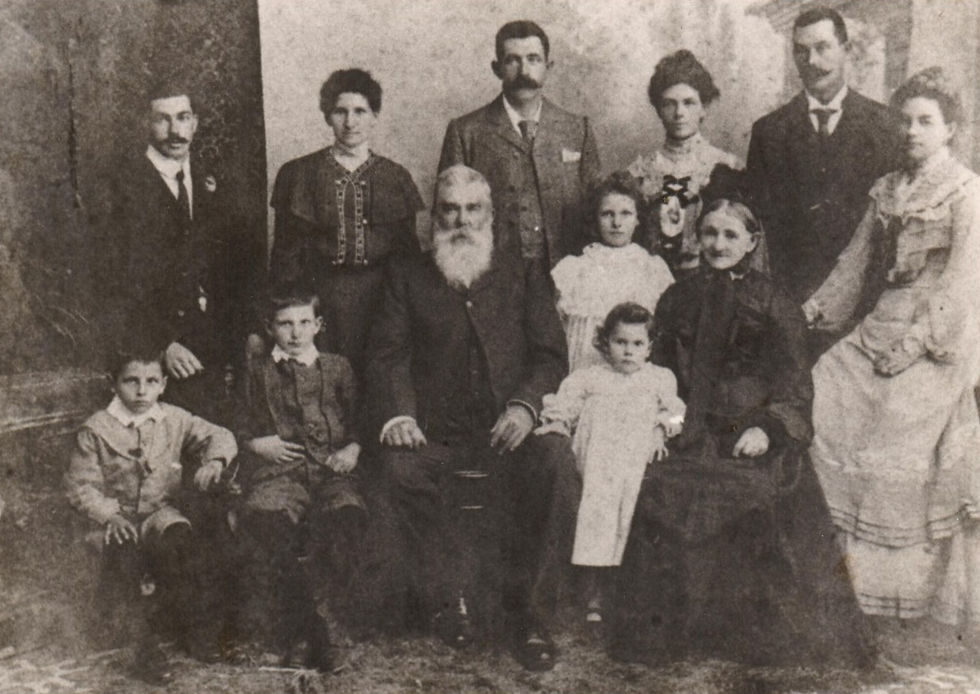
Andrew Young Arthur (1838-1906) with his wife Mary Campbell (1835-1909), their son John (1868-1941) and Elizabeth (1869-1942) eventually found their way to Heidelberg in December 1872. He rented a house in Strydom Street, from this time until 8 September 1874, when he purchased the house from the widow of Jan Fredrik Mertz for £10 sterling. Andrew was an engraver by trade but became the local butcher in partnership with Petrys Uys.
There is a plaque in honour to the two Arthur children, Andrew (20) and Annabella (18) who died of Typhoid in 1897, within 3 days of each other, in the Heidelberg Methodist Church.
THE HISTORY OF THE ARTHUR SETTLER HOUSE ON STRYDOM STREET
ARCHITECTURAL ORIGINS AND PIONEER URBAN TENNANTRIES (1865 - 1874)
This property represents one of the foundational settler residences constructed by town founder Heinrich Ueckermann, holding a strong claim as the oldest surviving residential home in Heidelberg. Built originally with a modest layout consisting of just two front rooms, the structural footprint expanded over time through subsequent property extensions and detached outbuildings.
The property passed through a rapid succession of frontier owners during its first decade. In October 1988, D.H. Rodd from the Department of Architecture compiled a definitive chronological title registry from the regional Deeds Office, augmented by historical details provided by the contemporary property custodian, Mr Jack Taylor:
-
05 October 1865: Sarah Venter
-
15 May 1866: William McLaren
-
15 November 1866: Philippus Petrus Roets (Purchased for £18)
-
11 August 1869: Fritz von Grafsow (Purchased for £8)
-
27 June 1871: Jan Fredrik Merz
-
08 September 1874: Andrew Young Arthur (Purchased from the widow of Jan Fredrik Merz for £10)
-
14 February 1907: Elizabeth Young Arthur
-
14 February 1907: William Arthur (Acquired for £404.19)
-
13 August 1934: Elizabeth Young Green (Acquired for £485)
-
21 April 1943: Mary A. Campbell Ward
-
07 March 1967: John Edward Bruce (Acquired for R5,125)
-
05 July 1982: Jack H. Taylor (Purchased for R20,000)
THE EMIGRATION AND TRANSIT OF THE ARTHUR FAMILY
Andrew Young Arthur (1838 - 1906) and his wife, Mary Campbell (1835 - 1909), emigrated from their native home in Kelvingrove, Glasgow, Scotland, boarding the vessel Tugela and arriving in Durban in 1867. The family initially trekked inland to the remote settlement of New Scotland, located in the Barberton Valley region. Following an era marked by immense operational hardship and personal tragedy, they struck out for the diamond fields of Kimberley during the historic diamond rush.
In December 1872, Andrew and Mary, accompanied by their young children John (1868 - 1941) and Elizabeth (1869 - 1942), eventually redirected their journey to Heidelberg. Upon arrival, Andrew rented a local house located on Strydom Street. He occupied this rented residence until 8 September 1874, when he formally secured permanent ownership of the property by purchasing it from the widow of Jan Fredrik Merz for £10 sterling. Though an engraver by trade, Andrew adapted to the frontier economy by opening a prominent local butchery business in partnership with Petrus Uys.
The family line maintained a prestigious connection to South African civic history. Andrew Young Arthur’s granddaughter, Mary Kathleen Ward, married John Edward Bruce in New York in 1945 while Bruce was serving the Jan Smuts administration as the official South African Ambassador to the United States. Mary inherited the historic Strydom Street estate on 7 March 1967, preserving it within the direct bloodline until she executed a formal deed of sale to Mr Jack Taylor on 5 July 1982.
GENERATIONAL ENGRAVINGS AND SENSITIVE ARCHITECTURAL RESTORATION
The Strydom Street façade features a notable architectural element: the original timber casement windows flanking either side of the primary entrance door, which survive intact to this day. Forensic inspection of these panes indicates that they likely contain the original glass installed during the mid-19th century. The interior surface of the glass bears distinct, fine scratches spelling out the individual names of the Arthur children, which were etched directly into the glass by the siblings more than a century ago.
When Jack Taylor purchased the property in 1982, the historic house was occupied by short-term tenants and had fallen into an advanced state of structural neglect. Before moving his family into the home, Taylor initiated a comprehensive, highly sensitive architectural restoration program.
He strictly mandated the reuse of historical timber-framed windows wherever structurally viable, personally combing active demolition sites and local pawn shops to salvage authentic period components for integration into the repair work. Taylor also undertook the painstaking task of hand-stripping decades of layered paint from the exterior timber doors and window frames fronting Strydom Street, fully revealing the natural raw finish of the historic Oregon pine underneath.
ECCLESIASTICAL SHIFTS AND TRAGIC WAR LOSSES
The Arthur family played an active role in the evolving spiritual landscape of early Heidelberg. They initially attended services at the historic Dutch Reformed Klipkerk. Upon the establishment of a local Methodist ministry, the family transferred their affiliation to the Methodist Church, remaining there until the formal arrival of the Presbyterian Church in the town during the early 1900s.
The family's multi-generational church records track their integration into the local community. The eldest son, John Arthur, married a Miss van Zyl, whose father served as an elected member of the Volksraad within the Transvaal Republic government.
Their daughter, Sarah Johanna Arthur (1872 - 1929), was christened inside the Klipkerk. She subsequently married Vernon Russell Ryan, and the couple named their son Arthur to honor his great-grandfather’s family name. This son, Arthur Ryan, was formally christened inside the Heidelberg Presbyterian Church on 11 December 1920.
The family’s deep historical footprint in the town also bears the somber marks of late 19th-century epidemics. A prominent memorial plaque remains preserved inside the Heidelberg Methodist Church, erected to honor the memory of two of the Arthur children - Andrew, aged 20, and Annabella, aged 18 - who contracted typhoid fever and tragically passed away within three days of each other during the 1897 outbreak.
Sources: The 1986 Architectural Heritage Folder compiled by Herbert Prins; the 1988 D.H. Rodd Department of Architecture Study; and archival family research published in the Heidelberg Heraut on 13 October 2004.


