Your guide to Heidelberg Gauteng
#Heidelberg Cabinet makers
Heritage Blue Plaque #Nr 57
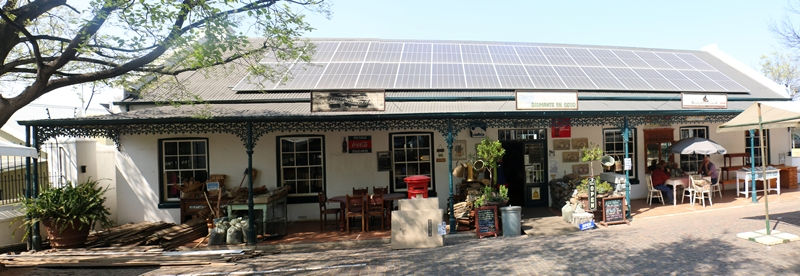
HEIDELBERG CABINET MAKERS - 40 Begeman Street

What is the story here?
The premises is located at 40 Begeman Street, Heidelberg.As per the historical book “Die Geskiedenis van Heidelberg” stand no 64 initially belonged to Jeremias Frederik Ziervogel and then Mr Bronkhorst. It is believed that The Bronkhorsts had a farm and possibly the property in Begeman street. Mr Fanie Bronkhorst died at the batte at Modderbult on December 24, 1900.
THE HISTORY OF 40 BEGEMAN STREET AND THE HEIDELBERG CABINET MAKERS
THE BLUE PLAQUE RECOGNITION AND MODERN PRESERVATION
The rich commercial and structural legacy of the property at 40 Begeman Street achieved formal preservation status on 2 September 2022. During an official civic ceremony hosted by the Heidelberg Heritage Association, local historian Mr Tony Burisch formally awarded a prestigious Blue Heritage Plaque to the site.
The installation is catalogued as Blue Plaque Number 57 within the association's heritage master index. The current building custodians, Christo and Melinda van der Merwe - who originally established the prominent local Diamante en Goud (Diamonds and Gold) shop in Heidelberg in 1880 - completely renovated the historic property before permanently moving their operations into the premises in 1992. The Van der Merwe family are long-term, highly respected members of the community, having been Heidelberg residents for 43 years.
PIONEER ROOTS AND BATTLEFIELD SACRIFICES
According to the historical land records documented in the archival text Die Geskiedenis van Heidelberg, the original plot, designated as Stand 64, initially belonged to Jeremias Frederik Ziervogel before the land title passed into the hands of the prominent Bronkhorst family. Historical tracking indicates that the Bronkhorsts operated an extensive agricultural farm in the district alongside maintaining this specific property on Begeman Street.
The family line paid a heavy toll during the Second Anglo-Boer War, enduring the loss of two brothers in the field:
-
Burgher Fanie Bronkhorst: Enlisted with the local commandos and was killed in action during the intense engagement at the Battle of Modderbult on 24 December 1900.
-
Burgher Jacobus Bronkhorst: Perished during the frontline operations at Ladysmith on 3 January 1900.
Following the cessation of hostilities, both fallen brothers were returned to the town center and buried alongside one another within the historic family plot at the Heidelberg Kloof Cemetery.
Early civic records further confirm that the property's foundational owner, Jeremias Ziervogel, operated as a premier medical doctor within the district during the mid-19th century. Dr Ziervogel married Susanna Hartley Smith Cawood, and the pioneer couple raised seven children on the highveld.
THE ATTJANBELL WORKSHOPS AND MID-CENTURY EXPANSIONS
The industrial infrastructure at the rear of the premises was constructed between 1935 and 1936. Sourcing official architectural blueprints, the project was originally executed for Mr G.S. de Vries, before the manufacturing facility was acquired by Mr Francis C. Maude to serve as the main production workshop for the Attjanbell Cabinet Works.
In 1941, Maude directed a significant modernization of the factory infrastructure, submitting successful building applications to construct a specialized battery room, a dedicated industrial smoke room, and installing the property's first modern flushing toilets. The prominent primary building fronting directly onto the street line was subsequently constructed in 1950 to expand the trading footprint.
THE MUNICIPAL DEED AND ARCHITECTURAL CHRONOLOGY
Official municipal building applications, blueprint submissions, and property records reconstruct a clear chronology of local owners who directed the development of Stand 64:
-
1935 – 1945: Mr G.S. de Vries (Commissioned the original rear manufacturing workshops and timber yards)
-
1950 – 1957: Mr Francis C. Maude (Erected the main 1950 front building and managed the Attjanbell Cabinet Works)
-
1973: Mr Eslin (Acquired the commercial precinct for corporate use)
-
1992: Mr Christo van der Merwe (Purchased the estate, executing a comprehensive historic renovation to house his jewelry enterprise)
-
SOURCES AND CREDITS
-
Primary Historiography: Derived from the localized property feature article written by journalist Eugene Viljoen, published in the 7 September 2022 edition of the Heidelberg/Nigel Heraut.
-
Deeds and Local History: Consolidated from historical data in "Die Geskiedenis van Heidelberg", and the municipal blueprint registries of the Heidelberg Heritage Association curated by Tony Burisch.