
Your guide to Heidelberg Gauteng
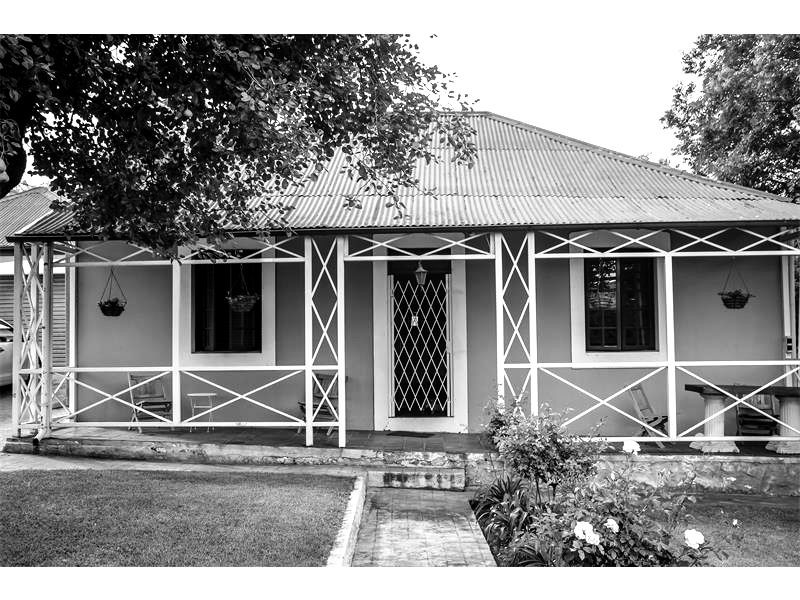
#5 Fenter Street
Heritage Blue Plaque #Nr 67
5 Fenter Street

What is the story here?
Fenter Street was names after the son-in-law of Mr. DJJ Strydom. Strydom was the original owner of the farm Langlaagte. Mr JL Fenter and Mr OA Strydom inherited the farm Langlaagte which later became Heidelberg.
The British were reportedly not happy that the street name originated from a Boer Surname and changed Venter Street to Fenter Street. Fenter Street was a sought after place for gatherings in the Old Transvaal. It was the location for official festivities, also part of the official celebrations of the Union on 31 May 1910, from which date Heidelberg become a political seat in parliament.
THE HISTORY OF 5 FENTER STREET AND THE COACHMAN’S ESTATE
THE BLUE PLAQUE RECOGNITION AND ARCHITECTURAL LOSS
The historic property situated at 5 Fenter Street achieved formal preservation status on 25 November 2022. During an official civic ceremony hosted by the Heidelberg Heritage Association, local historian Mr Tony Burisch formally unveiled a prestigious Blue Heritage Plaque on the site.
The installation is catalogued as Blue Plaque Number 67 within the association's heritage master index. Based on forensic tracking of the underlying masonry styles and early municipal layouts, it is highly probable that the primary residence was originally constructed circa 1890.
A retrospective structural assessment of the property reveals a significant loss of historical fabric. When the residence underwent modern renovations, the period-authentic Oregon pine ceilings, the original timber strip floors, the historic sash-cord window frames, and the original brick fireplace were entirely extracted and discarded by contractors.
As a result of these extensive alterations, no original architectural elements survive intact inside the house today. Heritage monitors note that the extreme advanced decay of these timber elements prior to the renovations serves as a material confirmation of the home's true 19th-century longevity, indicating that the original unseasoned pioneer woods simply failed to survive modern tenancies.
REPUBLICAN LORE AND DEED TRANSFER TRACKING (1866 – 2018)
The estate is deeply tied to the romantic oral lore of the old Zuid-Afrikaansche Republiek (ZAR). Persistent highveld town rumours maintain that the property was personally purchased by President Paul Kruger to serve as a dedicated residence for his executive transport coachmen. This connection frequently links the property to local debates regarding the hidden location of the legendary, missing sovereign state gold reserves, colloquially known across South Africa as the "Kruger Millions."
During the early foundational era of the town grid, the extensive property footprint dominated the local block, running uninterrupted all the way from Jordaan Street through to Marais Street before undergoing subsequent modern real estate subdivisions. A comprehensive investigation of the regional Deeds Office archives and municipal building plans reconstructs a clear chronological log of property custodians who directed the estate:
-
1866: J.M. Strydom (Secured the primary plot allocation following the town's proclamation)
-
1960: M.P.J. Lindeque (Acquired the property during the mid-century urban expansion)
-
1964: W.G. Jordaan (Purchased the estate from the Lindeque family)
-
1973: Ernest James Belling (Managed the residential property throughout the 1970s)
-
1988: C. van Nieuwkerk (Registered ownership during the late apartheid era)
-
2003: R. Dickson (Acquired the home following the democratic transition)
-
Pre-2018: Juan and Ziona Ferreira (Maintained the estate before selling it out of their family line)
-
2018: Theodor and Carla le Roux (The contemporary property custodians who purchased the residence)
SOURCES AND CREDITS
-
Primary Historiography: Derived from the heritage property feature article written by journalist Eugene Viljoen, published in the 30 November 2022 edition of the Heidelberg Heraut.
-
Archival Tracking: Consolidated from the official title deed transfers of the Transvaal Deeds Office, ZAR presidential transport histories, and the master installation indexes of the Heidelberg Heritage Association curated by Tony Burisch.


